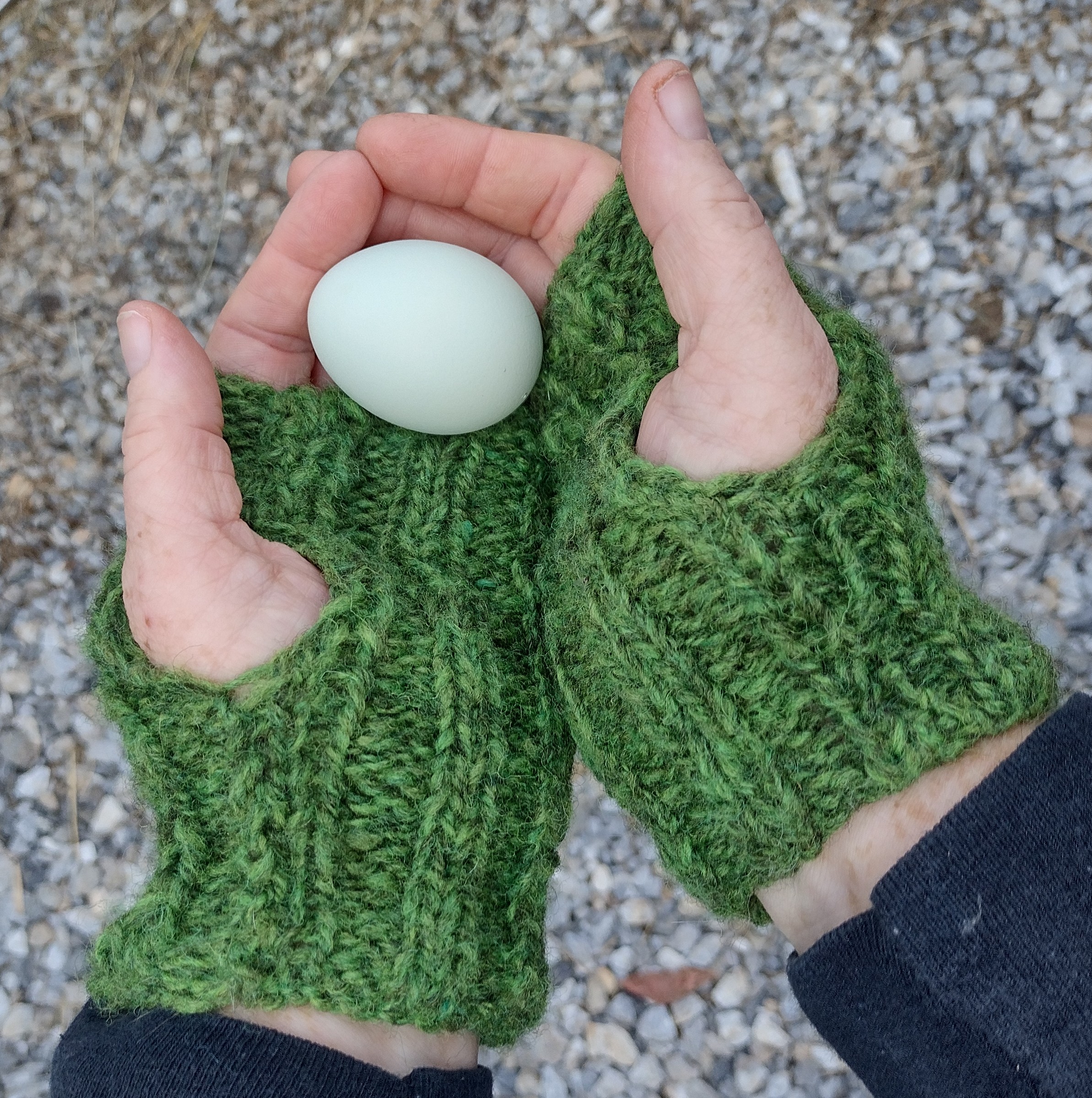
New Series and an Easy Pattern

As gardeners/homesteaders/small farmers, we spend a lot of time thinking about the food and medicines that we consume. And that’s great! But, in my opinion, we don’t spend enough time thinking about the fibers we put in our homes and on our bodies. It’s wonderful to eat fresh foods, but how healthy are we really if we’re wearing things that are shedding microplastics into our water sources at the same time?

I’m introducing a series here on my website that will feature a free monthly pattern for anyone who wants to make their own textiles but isn’t very experienced yet. The majority of these patterns will be knitted rectangles that can be seamed into various garments. I’ll be using handspun yarn for the samples, but will make suggestions about what to look for if you’re buying commercial yarn. The goal of this project is slow cloth and slow fashion, just like the slow food movement.

If you’re new to knitting, or you’re a spinner who isn’t sure yet how to use the yarn you’ve created, then this series is for you! My goal is to share the type of patterns I would have loved to knit when I was starting out with fiber arts 20 years ago. These will be simple, useful designs that showcase the beautiful textures of handspun yarn, and put the power of cloth making into your own hands. I’ll alternate large and small projects so there’s something for every type of spinner and knitter.

These patterns are also knitted flat for the most part, which is easier for someone like me who has both nerve damage in my wrists and arthritis in my hands. I sometimes have a terrible time with double pointed needles, especially if they’re small.

If you don’t spin these patterns will still work for you! If you want to source handspun yarns or small mill produced yarns, the Livestock Conservancy’s Shave ’em to Save ’em program is a great place to start. I want people to feel free to use their wool (or any other fiber), or to source yarn from a local farm. For that reason, these patterns will not be fussy or too precious. They don’t have to be perfect, they’re meant to be used! Wear those mitts in the barn or to the farmer’s market. Making your own things can lead to a deep feeling of accomplishment and encouragement to try more new projects.

The fashion and textile industry creates as much as 10% of the world’s total pollution. That’s a staggering amount. In addition, up to 60% of the textiles created each year are plastic based. It may feel like your one pair of mitts is hardly a drop in the bucket, but it does make a difference.

I have a few different patterns for fingerless mitts, but this is by far the simplest and easiest of them. You will knit two rectangles and sew one seam up the side of each, leaving a hole for the thumb. I wear my mitts every day while I do barn work for about 4 or 5 months of the year. I never used to believe that fingerless mitts did anything to keep your hands warm so I never bothered to knit any. With age has come some wisdom. Mitts keep your hands surprisingly warm and still leave your fingers free to collect eggs, give out treats, or just to use your phone or camera. Plus, they’re some of the oldest knitted garments out there.

The pattern for November, 2024 is Ribbed Barn Mitts.

Coming Soon – Sheep!

Despite the best of intentions, I have not kept up with this blog. So, once again, I am going to make a concerted effort to produce more posts on a somewhat regular basis. In the Fall I’ll be returning to fiber art in a more dedicated way. I’ll be washing wool, spinning, dyeing, weaving, and teaching. I’ll also be writing about our newest additions to the Athlone Farm/Baltimore Wool Company.

This afternoon we’ll be picking up and bringing home our first sheep! Our current population will be 5 llamas, 4 alpaca, 2 sheep, and 13 chickens. The sheep are a pair of adorable Jacob ewes that we’re adopting from a local rescue. We also plan to add a couple of Hog Island sheep  sometime in the near future.

sheepshed

Yesterday was dedicated to the construction of a summer house for the girls. While I’ve had llamas and alpacas for the last 15 years, sheep do have some different needs. The sheep girls will have their cozy new shed (fitted with a fan for summer,) as well as good hay, minerals, a water bucket and some nice pasture. I’ll be posting more once we have them settled in their new home. And in a year, all of that beautiful marbled fleece will be ready to shear.


Raw Wool, Babydoll Southdown

Spring means shearing and that means lots of raw fleece. And that means it’s time to buy from my favorite farms. Last Sunday I paid a visit to the Smyth family at Sweetwater Farm. They breed registered Babydoll Southdown sheep right up the road from me in Hampstead, MD. The Smyths love their sheep and take excellent care of them. It shows in the quality of their wool!

Also known as Olde English Southdown, Babydolls are small, friendly sheep with very pretty, springy wool. It tends to be finer than the wool produced by the larger, dual-purpose Southdown sheep. Babydolls also produce lots of beautiful colors and sometimes have spotted coats. These characteristics combined make Babydolls a handspinner’s dream.

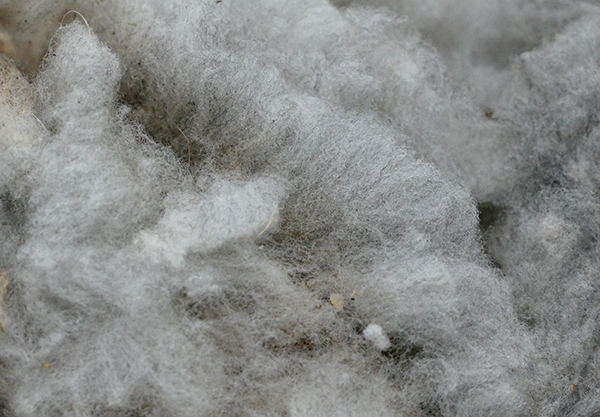
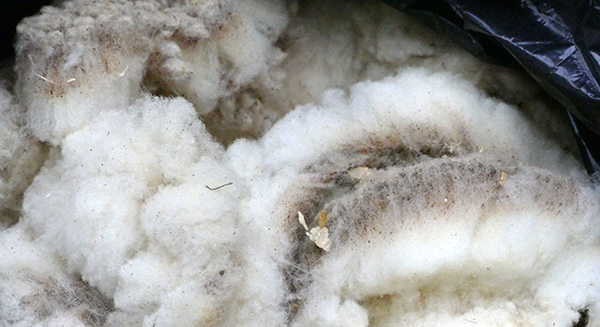
I ended up buying 5 lovely full fleeces. Two are white/cream colored, one light gray, one dark gray, and one spotted/multi colored fleece. I’ve already started washing wool and hope to have carded batts, roving, and yarn available on my Etsy store by the end of the month.


It’s Shearing Time Again

It’s Shearing Time Again!

Each Spring when I shear my llamas and alpacas I end up with around 20-25 pounds of suri alpaca fiber. There are 5 suris in my herd and every year I am amazed by their beautiful fleece.

nateandkwam - Copy

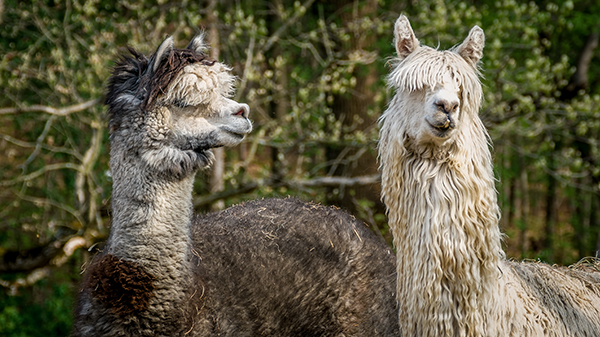
 Nate, on the left, is a huacaya alpaca. Kwame, on the right, is a suri. The suri fiber hangs down in long, straight locks. 

Suri is a very heavy, silky fiber. It makes wonderfully light and warm fabric when very finely spun into super thin yarns. But in my experience, 100% suri yarns any heavier than lace weight are not ideal. There are exceptions, of course, but because I sell most of my yarn I prefer to create the most versatile yarns possible by blending my suri fiber.

As little as 20% fine wool blended with suri fiber lightens a skein enough that it is a pleasure to knit, crochet, or weave with. The yarn still shows off suri’s drape, luster, and softness but the wool adds a bit of bounce. The more wool you add, the lighter in weight the skeins become.

Because elasticity and softness are the major characteristics I’m looking for, I choose wool from sheep breeds known to exhibit softness and elasticity in their wool. My current favorites are CVM/Romeldale and Rambouillet. Both are soft and springy and come in lots of beautiful colors.

It’s important to me to choose my fleece from local (to me) sheep farms where I can actually see the sheep. I’ve been lucky enough to find a handful of excellent farmers to buy from here in Maryland. One of my favorites is Pheasant Field Farm in Chestertown, MD. The sheep are happy and well loved and they grow gorgeous wool! Most of the flock are CVM, Romeldale, and Romney x.

And that brings me back to shearing. Ebay, my smallest alpaca, is a very dark brown suri. His fiber is super heavy and slick and really benefits from blending. It’s hard to match that dark chocolate color as well as the fineness of Ebay’s fleece…but this year I can do it thanks to Pheasant Field Farm! Gabriel, a Romeldale yearling, has the perfect wool.

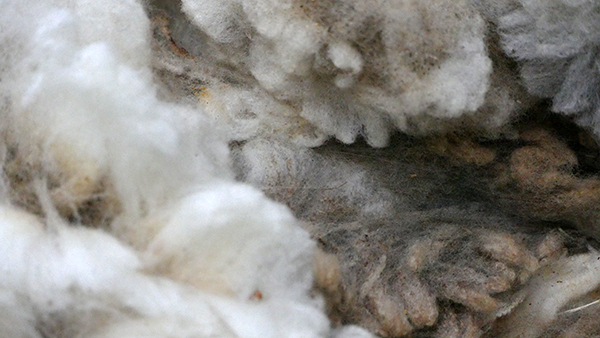
Ebay’s fiber on the left.  Ebay and Gabriel’s fleeces side by side.

I’m excited about this blend and can’t wait to get started. The next sunny day we have I’ll be scouring and putting fleece out on screens to dry. I’ll take more photos of the blending process, the carded batts, and the finished yarn. If it turns out as well as I hope I’ll have it for sale at the farmer’s market next month. See you there!