As gardeners/homesteaders/small farmers, we spend a lot of time thinking about the food and medicines that we consume. And that’s great! But, in my opinion, we don’t spend enough time thinking about the fibers we put in our homes and on our bodies. It’s wonderful to eat fresh foods, but how healthy are we really if we’re wearing things that are shedding microplastics into our water sources at the same time?
I’m introducing a series here on my website that will feature a free monthly pattern for anyone who wants to make their own textiles but isn’t very experienced yet. The majority of these patterns will be knitted rectangles that can be seamed into various garments. I’ll be using handspun yarn for the samples, but will make suggestions about what to look for if you’re buying commercial yarn. The goal of this project is slow cloth and slow fashion, just like the slow food movement.
If you’re new to knitting, or you’re a spinner who isn’t sure yet how to use the yarn you’ve created, then this series is for you! My goal is to share the type of patterns I would have loved to knit when I was starting out with fiber arts 20 years ago. These will be simple, useful designs that showcase the beautiful textures of handspun yarn, and put the power of cloth making into your own hands. I’ll alternate large and small projects so there’s something for every type of spinner and knitter.
These patterns are also knitted flat for the most part, which is easier for someone like me who has both nerve damage in my wrists and arthritis in my hands. I sometimes have a terrible time with double pointed needles, especially if they’re small.
If you don’t spin these patterns will still work for you! If you want to source handspun yarns or small mill produced yarns, the Livestock Conservancy’s Shave ’em to Save ’em program is a great place to start. I want people to feel free to use their wool (or any other fiber), or to source yarn from a local farm. For that reason, these patterns will not be fussy or too precious. They don’t have to be perfect, they’re meant to be used! Wear those mitts in the barn or to the farmer’s market. Making your own things can lead to a deep feeling of accomplishment and encouragement to try more new projects.
The fashion and textile industry creates as much as 10% of the world’s total pollution. That’s a staggering amount. In addition, up to 60% of the textiles created each year are plastic based. It may feel like your one pair of mitts is hardly a drop in the bucket, but it does make a difference.
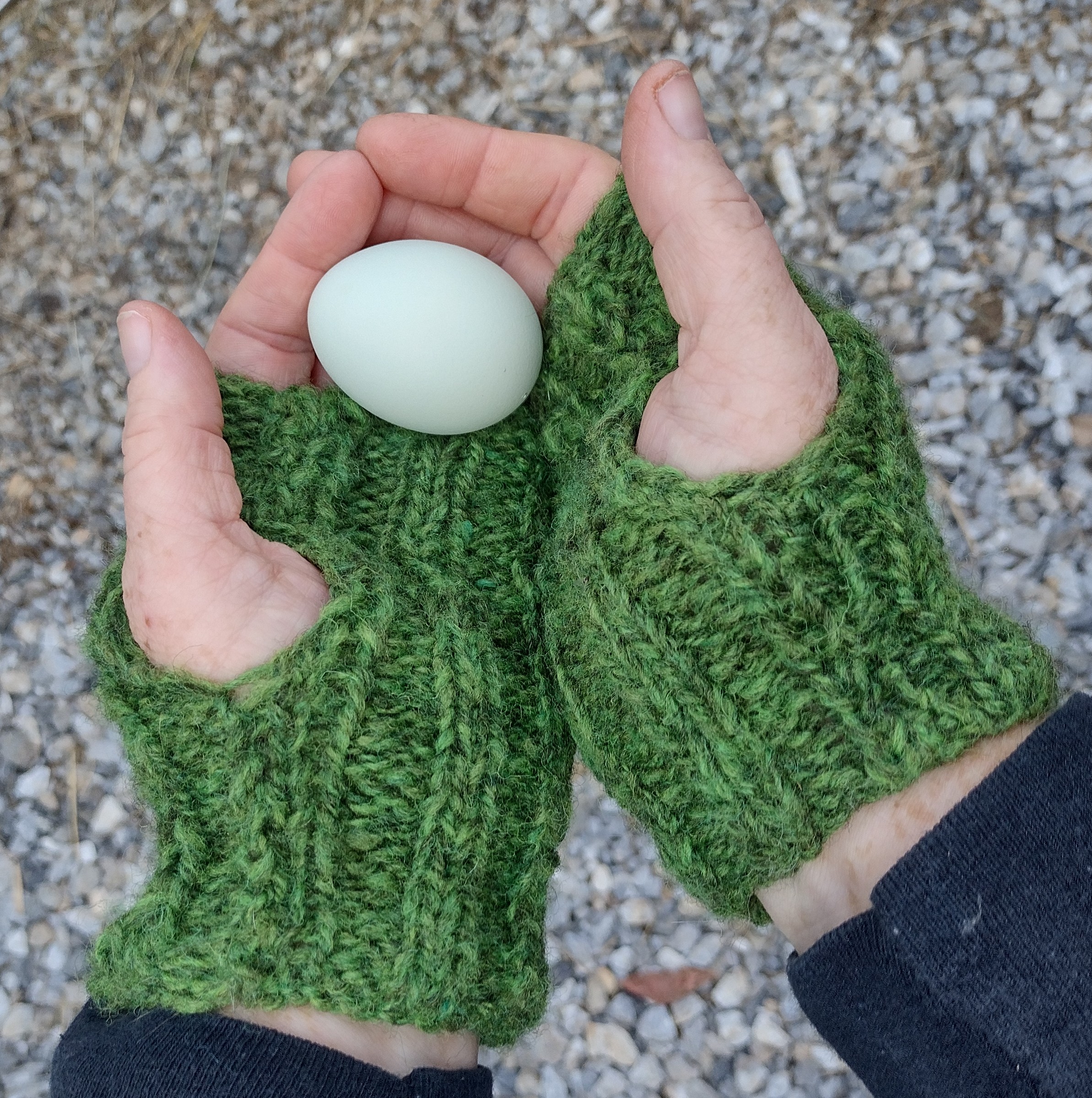
I have a few different patterns for fingerless mitts, but this is by far the simplest and easiest of them. You will knit two rectangles and sew one seam up the side of each, leaving a hole for the thumb. I wear my mitts every day while I do barn work for about 4 or 5 months of the year. I never used to believe that fingerless mitts did anything to keep your hands warm so I never bothered to knit any. With age has come some wisdom. Mitts keep your hands surprisingly warm and still leave your fingers free to collect eggs, give out treats, or just to use your phone or camera. Plus, they’re some of the oldest knitted garments out there.
The pattern for November, 2024 is Ribbed Barn Mitts.
 Baltimore Wool Company